All You Need to Know to Stay VAT Compliant in Kenya
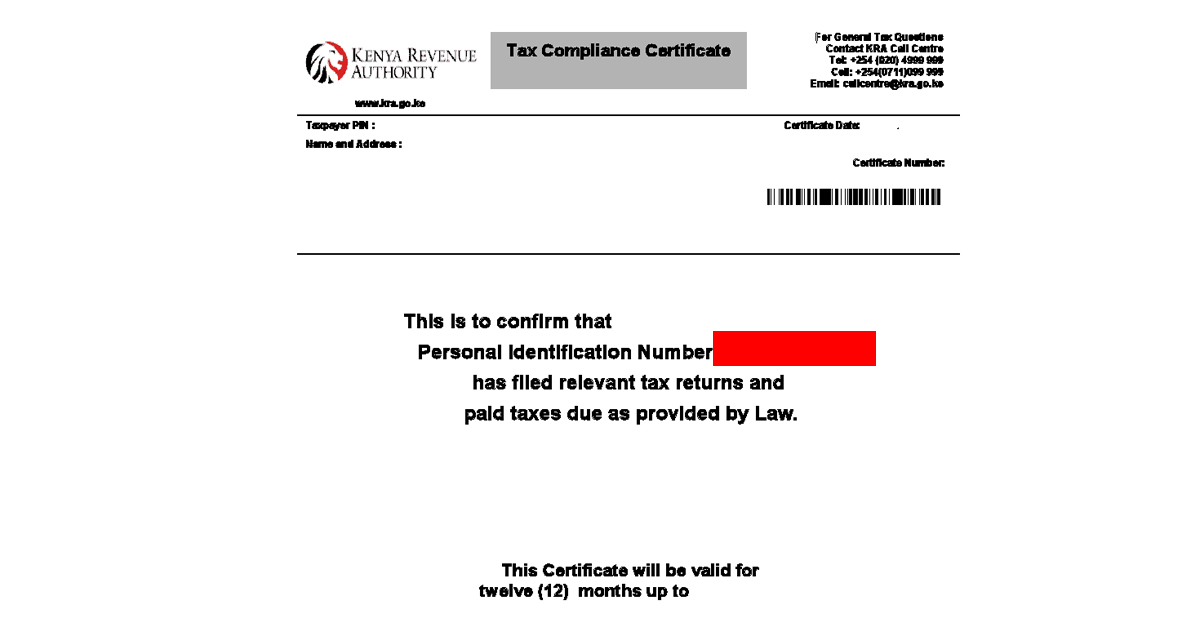
VAT Tax in Kenya: All You Need to Know to Stay VAT Compliant
The Kenyan government administers different types of taxes but the Value Added Tax (VAT) is one of the main taxes impacting business owners. In this article, we’ll dwell on all you need to stay tax compliant according to the laid down procedures of the taxman, the Kenya Revenue Authority (KRA) - from its rates to registration and returns – as you contribute to fulfilling your mandate to government.
VAT in Kenya
The Value Added Tax is a tax that is applicable to the sale or import of taxable goods and services, and is administered by the Kenya Revenue Authority (KRA).
If one sells taxable supplies worth 5 million shillings or more within a year, s/he must register with the KRA for VAT. Once you’ve registered, you are required to file monthly returns and remit the VAT you’ve collected from your customers which is mostly passed on to them in the final product costs.
How Does VAT Work?
VAT is charged at every point in the production chain until it reaches the final consumer. So, if you are selling a box of matches, VAT would be applied at every stage, from when the wood is sourced to when it is sold to you by a wholesaler. You will then apply VAT when you sell it to the final consumer.
VAT Rates in Kenya
There are three tax rates that apply across Kenya:
- 16% – the standard rate for taxable goods and services, as well as imports
- 8% – the rate applied to the local supply of fuel, petroleum oils, etc.
- 0% – the rate applied to exports, international passenger transport, and zero-rated supplies (such as supplies sent to Export Processing Zones (EPZs), diplomats, and governments)
Note: A 3% turnover tax is charged on businesses below the VAT registration threshold, between KES 100,000 and 500,000.
Calculating VAT in Kenya
The VAT you pay to your seller when you buy something from them for resale is called input VAT, while the VAT you charge your buyer while making a sale is called output VAT.
VAT is the difference between the Output and Input tax.
VAT payable = Output VAT – Input VAT
For instance, if you bought electronics for 5,000 KES taxed at 16%, you would have to pay 800 as the input VAT. So, the total amount you would have to pay would be 5,800 KES. Then, if you sell the same electronics at a profit of 10% of the price (10% of 5,000) for 5,500 and add the output VAT of 16% (880), the total selling price would be 6,380 KES.
So, the VAT payable = Output VAT – Input VAT (880 – 800 = 80 KES)
VAT Registration
If you are making taxable sales (except the sale of capital goods) in Kenya worth KES 5 million annually, you need to register for VAT as per government regulations.
You can register online via iTax, the official government online portal for KRA, to register and file returns.

Figure 1: Online Portal for KRA for the VAT Registration
Once you’ve registered, you need to start collecting VAT from your customers whenever you make taxable sales or issue invoices. You can start collecting VAT as soon as you receive your Personal Identification Number (PIN). The newly created PIN can also be used to pay the VAT amount after filing your returns. In the case of imports, you need to collect the amount from your customer as soon as the customs clearance for imports has been completed.
Note: There’s a 16% VAT on online services (such as software downloads, movies, e-learning, and more) provided by non-residents via digital marketplaces. So, non-residents have to register for VAT (there is no VAT registration threshold), but there won’t be an option to recover Kenyan input VAT through this registration.
VAT Exempt Supplies
VAT exempt supplies are those that won’t be subject to VAT, and would not qualify for an input tax deduction.
Some exempt supplies include:
- Unprocessed agricultural products and agricultural services
- Medical supplies (like physiotherapy accessories, treadmills, and ventilators)
- Financial services and insurance
Suppliers of imported digital services will also be exempt from VAT, as they are excluded from meeting the KES 5 million VAT registration threshold.
Filing VAT returns
VAT returns have to be filed on a monthly basis via iTax. For each month, the return should be filed by the 20th of the following month. If you don’t have any VAT to declare, you need to file a nil return.
After filing it online, you have to generate an E-slip (from the same iTax portal) which is used to to physically pay the tax amount at KRA-appointed banks. However, instead of showing up physically, you can also authorize your bank to pay your VAT through a direct credit payment to the Commissioners account at the Central Bank of Kenya.
Input Tax Credits
You can claim a deduction of the input VAT (paid at the time of making a purchase) while filing returns. While the amount can be regained when you sell the same item to your customer, any additional VAT incurred can be deducted from the tax payable via your return.
Input tax can be deducted within six months of the tax period in which the sale took place.
Note: You can get a VAT refund for any VAT paid on bad debts within four years from the date of sale.
Penalties
If there’s a delay in filing returns or not paying your due VAT, penalties and interest will be applied. This applies to all KRA PIN holders.
- For late filing: A penalty of KES 10,000 or 5% of the due tax amount will apply for delayed filing of returns.
- For late payment: 5% of the due tax amount and an interest of 1% per month should be paid on the unpaid tax until you pay the whole VAT amount due.
Electronic Tax Invoice
The electronic tax invoice is an invoice with a QR code, which is generated by a compliant Electronic Tax Register (ETR). Using this QR code, you can ensure the accuracy of your invoice details.
Issuing an electronic tax invoice is necessary for all VAT registered taxpayers. Once you’ve issued the invoice, the online copy (the electronic tax invoice) will be transmitted to KRA.
VAT on Imports
Imported goods are subject to import duty at varied rates (0% for raw materials and capital goods, 10% for intermediate goods, and 25% for finished goods).
The following groups are exempt from payment of import duty:
- Machinery (excluding motor vehicles) imported into Kenya solely for direct use in oil, gas, or geothermal development
- Imports of goods by enterprises established under the Special Economic Zones Act and the Export Processing Zones Act
VAT on imported services is called reverse VAT. These imported services refer to:
- Services provided by non-residents who don’t have to register for Kenya VAT
- Services provided by export processing zones for use in Kenya
If you are importing a service, irrespective of whether you’ve registered for VAT or not, you should pay VAT on the imported service whenever the service and invoice have been received.
Taxes paid on imported services that will be used in a registered person’s business can be deducted as input tax in future VAT returns.
Withholding VAT
Withholding VAT is a process where government-appointed withholding agents collect a portion of VAT from payments made to local sellers. These withholding agents can’t be final consumers of the product or service. The amount of VAT to be withheld and remitted is 2% of the value of the taxable supplies.
This process was introduced by the government in order to maintain accuracy of details and proper payment of the due VAT amount. As a typical procedure, the agent (also a taxpayer) may have a customer who pays for the goods without paying the VAT amount. In this case, the tax agent can withhold the VAT and issue a certificate to the seller for the amount. The seller can then claim this VAT charged at 2% of the invoice value.
You can pay the withheld VAT amount online via iTax. This payment is remitted by the agent to the Commissioner on the 20th day of the month following the deduction.
If your VAT has been withheld, you still have to submit an online return and account for the VAT balance.
Note: Withheld VAT doesn’t apply to zero-rated supplies and exempt goods or services. If it is withheld, it will be treated as a tax paid in error and will be refunded by the Commissioner. For business to government (B2G) transactions, the agent must withhold 6% of the VAT due to the seller.
Is this blog helpful?
0
0
Popular Posts

No Popular Posts Found
We're sorry what you were looking for. please try another way
Popular Categories
Tags
Related Articles
Best ERP Companies in Kenya
Below is a list of the best companies providing ERP solutions in Kenya and surrounding countries. These companies are resellers, IT providers, MSPs, consultancies and other channel companies. Check out the various services and solutions that they offer as indicated below. I. Emerging Solutions Kenya Emerging Solutions Kenya focuses more on providing online and offline solutions to businesses and companies in ICT related problems. We
Read Blog
Importance of SSL certificates.
Introduction The importance of SSL certificates. Why are they essential? In today's digital age, where online shopping has become the norm, ensuring the security of customer information is of paramount importance. This is where SSL certificates come into play. SSL (Secure Sockets Layer) certificates are cryptographic protocols that provide a secure channel of
Read Blog
How to Check My Mpesa Statements
How to check your Mpesa statements is as easy as saying cheese. It's important for you to check your Mpesa statements now and then. Why? For one it's part of being on a successful financial literacy journey as you can review your expenses. It's also a good way to view if there's any fishy transactions that you may have not initiated. In this short guide, we are going to look at different methods that you can use to check and even download your statements. The M-PESA Statement
Read Blog